Friday, November 16, 2007

Roman Colosseum

Roman Colosseum
Up until the late first century BC gladiatorial combats were held in the Forum, the Circus Maximus, and at other sites। When the games were held in the Forum, temporary wooden stands were put up. In 53 BC, the politician Curio (or one of his architects) had an interesting idea. Curio had two semi-circular wooden stands built on a pivot. When these stands were back-to-back, the spectators in each were treated in the morning to a different theatrical presentation, but in the afternoon the two sets of stands were swiveled about so that they together formed an oval. Thus the amphitheater was born. The first permanent stone amphitheater in Rome was built by Statilius Taurus in 29 BC.

Of course, everyone is familiar with the greatest Roman amphitheater, the Colosseum, which has remained a tourist attraction from the first century AD to the present day (see exterior above and interior left). The exterior of the Colosseum consists three tiers of arches and an attic story (most of the third tier and attic story have not survived). Note the underground area (hypogeum) that the destruction of the arena floor has revealed. This area was used for storage of equipment and to house wild animals. Elevators raised animals in cages from this underground level so that they could enter the arena through trap doors.

The name"Colosseum" came from a colossal statue (120 ft. high) of Nero that was located in the area near this amphitheater, which, however, was not called the "Colosseum" until the Middle Ages. It was built by the members of the Flavian dynasty (Vespasian, Titus, and Domitian) and its name in ancient times was the amphitheatrum Caesareum, "Caesar's (i.e., the emperor's) amphitheater." In modern times, it is often referred to as the "Flavian Amphitheater. It was dedicated in 80 AD by the emperor Titus and estimates of its capacity range from 40,000 to about 60,000 (see an ancient depiction of a crowded Colosseum on a coin). There were amphitheaters throughout the rest of Italy and all over the Roman world in Spain, Gaul, northern Africa, and the Greek east. Many amphitheaters in southern France are very well preserved and still in use as venues for bullfights, such as the one in Arles.

The amphitheater was a microcosm of Roman society. The seating arrangements reflected the stratification of Roman society. On a large podium the emperor had a special box and senators sat on marble seating divided into fourteen sections. Next came the members of the equestrian order, who sat in the lowest tier (ima cavea) of the amphitheater, consisting of twelve rows of marble seating divided into sixteen sections. Roman citizens affluent enough to afford to wear a toga occupied nineteen rows of marble seats in sixteen sections in middle of the seating area (media cavea). Above them in the summa cavea sat poorer citizens clad in dark garments (the pullati), slaves, freedmen, and foreigners residing in Rome. Women from these groups probably also sat among the men. This tier consisted of seven rows of limestone seating divided into sixteen sections. Finally, at the very top of the amphitheater was an gallery with wooden seats (summum maenianum in ligneis) on which sat wives of senators and equestrians protected from sun and rain by a colonnade. The podium, ima cavea and media cavea thus consisted of reserved seating, in which subdivisions of each group sat together. The status of a senator determined in what section he sat on the podium, as did that of an equestrian in the ima cavea. For example, in ima cavea there was a section reserved for those equestrians who had been assigned the honor of "with public horse," and who served on special jury panels. There even seems to have been a section reserved for bankrupt equestrians. In the media cavea soldiers were separated from civilians, married men from bachelors; boys and their tutors sat together, etc. In these three tiers the status of an individual in Roman society and within his own class would have been clear at a glance.

In the minds of the Romans, the amphitheater was a place of significant symbolic meaning. It was a place of civilized order where, from the Roman point of view, the victory of civilization over lawlessness, chaos, barbarism, and savagery was regularly enacted. It was also a place of justice: certain criminals were executed there by being given to the wild beasts or were forced to fight to the death as gladiators. It also represented the domination of Rome over its enemies: prisoners of war were either executed or forced to fight each other as gladiators. For the professional gladiator, however, the amphitheater was also a place of redemption, in which one could overcome death by victory or by stoically accepting it.

Chichén Itzá


Chichén Itzá

At the visitors' center at Chichén Itzá there are several informative displays including a model of the city and this placard with a brief description of the city's history:

Chichén Itzá, the ancient city whose name means "in the mouth at the Itzáe's Well", was, in its time of grandeur (between 800 and 1200 A.D.), the centre of political, religious and military power in Yucatán, if not all of South-eastern Meso America.

In its architecture one can observe a gradual change in style, starting with the Puuc style, also shared with Uxmal and other sites in the Penninsula and cluminating with the so-called Mayan Toltec style, due to the architectural similiarities with Tula, capital of the Ancient Toltecs, and with other sites in Central Mexico, such as Oaxaca and the Gulf Coast.

Chichén Itzá was a large city with a great many inhabitants, distributed around the architectural nucleii which we observe as ruins, who had a relatively easy access to the water coming from the various caves and Cenotes of the region.

The city is divided into two principal areas: Chichén Viejo (Old Chichén) and Chichén Nuevo (New Chichén). Click on the green image to see sample illustrations of each of the two areas.

Chichén Viejo was founded about 400 A.D. by the Maya and governed by priests. Here the architecture is characterized by many representations of the god Chaac, the Maya rain god.

Chichén Nuevo began about 850 A.D. with the arrival of the Itzá from Central Mexico. The city was rebuilt by the Itzá and is charactorized by images of the god Kukulcán, the plumed serpent. Around 1150 A.D. a new wave of Itzá took over the city and ruled for another 150 years until Chichén Itzá was finally overtaken by the rival city of Mayapan.

The Itzá were politically and commercially more aggressive than the earlier Maya rulers and the city's history under their rule was marked by many bloody battles.

Chichén Itzá was abandoned suddenly around 1400 A.D. perhaps because of internal fighting or for lack of food. There are many theories but nobody knows for certain.

Saturday, November 3, 2007

Machu Picchu


Machu Picchu

Description:

The ruins of Machu Picchu, rediscovered in 1911 by Yale archaeologist Hiram Bingham, are one of the most beautiful and enigmatic ancient sites in the world. While the Inca people certainly used the Andean mountain top (9060 feet elevation), erecting many hundreds of stone structures from the early 1400's, legends and myths indicate that Machu Picchu (meaning 'Old Peak' in the Quechua language) was revered as a sacred place from a far earlier time. Whatever its origins, the Inca turned the site into a small (5 square miles) but extraordinary city. Invisible from below and completely self-contained, surrounded by agricultural terraces sufficient to feed the population, and watered by natural springs, Machu Picchu seems to have been utilized by the Inca as a secret ceremonial city. Two thousand feet above the rumbling Urubamba river, the cloud shrouded ruins have palaces, baths, temples, storage rooms and some 150 houses, all in a remarkable state of preservation. These structures, carved from the gray granite of the mountain top are wonders of both architectural and aesthetic genius. Many of the building blocks weigh 50 tons or more yet are so precisely sculpted and fitted together with such exactitude that the mortarless joints will not permit the insertion of even a thin knife blade. Little is known of the social or religious use of the site during Inca times. The skeletal remains of ten females to one male had led to the casual assumption that the site may have been a sanctuary for the training of priestesses and /or brides for the Inca nobility. However, subsequent osteological examination of the bones revealed an equal number of male bones, thereby indicating that Machu Picchu was not exclusively a temple or dwelling place of women.
One of Machu Picchu's primary functions was that of astronomical observatory. The Intihuatana stone (meaning 'Hitching Post of the Sun') has been shown to be a precise indicator of the date of the two equinoxes and other significant celestial periods. The Intihuatana (also called the Saywa or Sukhanka stone) is designed to hitch the sun at the two equinoxes, not at the solstice (as is stated in some tourist literature and new-age books). At midday on March 21st and September 21st, the sun stands almost directly above the pillar, creating no shadow at all. At this precise moment the sun "sits with all his might upon the pillar" and is for a moment "tied" to the rock. At these periods, the Incas held ceremonies at the stone in which they "tied the sun" to halt its northward movement in the sky. There is also an Intihuatana alignment with the December solstice (the summer solstice of the southern hemisphere), when at sunset the sun sinks behind Pumasillo (the Puma's claw), the most sacred mountain of the western Vilcabamba range, but the shrine itself is primarily equinoctial.


Shamanic legends say that when sensitive persons touch their foreheads to the stone, the Intihuatana opens one's vision to the spirit world (the author had such an experience, which is described in detail in Chapter one of Places of Peace and Power, on the web site, www.sacredsites.com). Intihuatana stones were the supremely sacred objects of the Inca people and were systematically searched for and destroyed by the Spaniards. When the Intihuatana stone was broken at an Inca shrine, the Inca believed that the deities of the place died or departed. The Spaniards never found Machu Picchu, even though they suspected its existence, thus the Intihuatana stone and its resident spirits remain in their original position. The mountain top sanctuary fell into disuse and was abandoned some forty years after the Spanish took Cuzco in 1533. Supply lines linking the many Inca social centers were disrupted and the great empire came to an end. The photograph shows the ruins of Machu Picchu in the foreground with the sacred peak of Wayna Picchu towering behind. Partway down the northern side of Wayna Picchu is the so-called "Temple of the Moon" inside a cavern. As with the ruins of Machu Picchu, there is no archaeological or iconographical evidence to substantiate the 'new-age' assumption that this cave was a goddess site.
The Machu Picchu Gateway is the ultimate resource for tourist and travel information on Machu Picchu Peru, furthermore you may also easily book your next vacation to Machu Picchu Peru with us, we are partnering with Peru Gateway Travel the leading tour company for traveling to South America, this insure you to receive the most professional travel services, just fill out the forms that you will find on every travel program page and Peru Gateway Travel will answer within a business day. For further information on hotels, tours, vacation planner, comprehensive tours and travel services you may also toll free the numbers listed on the left border.
Machu Picchu is a city located high in the Andes Mountains in modern Peru. It lies 43 miles northwest of Cuzco at the top of a ridge, hiding it from the Urabamba gorge below. The ridge is between a block of highland and the massive Huaynac Picchu, around which the Urubamba River takes a sharp bend. The surrounding area is covered in dense bush, some of it covering Pre-Colombian cultivation terraces.

Machu Picchu (which means "Old Peak") was most likely a royal estate and religious retreat. It was built between 1460 and 1470 AD by Pachacuti Inca Yupanqui, an Incan ruler. The city has an altitude of 8,000 feet, and is high above the Urubamba River canyon cloud forest, so it likely did not have any administrative, military or commercial use. After Pachacuti’s death, Machu Picchu became the property of his allus, or kinship group, which was responsible for it’s maintenance, administration, and any new construction.
Machu Picchu is comprised of approximately 200 buildings, most being residences, although there are temples, storage structures and other public buildings. It has polygonal masonry, characteristic of the late Inca period.

About 1,200 people lived in and around Machu Picchu, most of them women, children, and priests. The buildings are thought to have been planned and built under the supervision of professional Inca architects. Most of the structures are built of granite blocks cut with bronze or stone tools, and smoothed with sand. The blocks fit together perfectly without mortar, although none of the blocks are the same size and have many faces; some have as many as 30 corners. The joints are so tight that even the thinnest of knife blades can't be forced between the stones. Another unique thing about Machu Picchu is the integration of the architecture into the landscape. Existing stone formations were used in the construction of structures, sculptures are carved into the rock, water flows through cisterns and stone channels, and temples hang on steep precipices.

The houses had steep thatched roofs and trapezoidal doors; windows were unusual. Some of the houses were two stories tall; the second story was probably reached by ladder, which likely was made of rope since there weren’t many trees at Machu Picchu’s altitude. The houses, in groups of up to ten gathered around a communal courtyard, or aligned on narrow terraces, were connected by narrow alleys. At the center were large open squares; livestock enclosures and terraces for growing maize stretched around the edge of the city.

The Incas planted crops such as potatoes and maize at Machu Picchu. To get the highest yield possible, they used advanced terracing and irrigation methods to reduce erosion and increase the area available for cultivation. However, it probably did not produce a large enough surplus to export agricultural products to Cuzco, the Incan capital.

One of the most important things found at Machu Picchu is the intihuatana, which is a column of stone rising from a block of stone the size of a grand piano. Intihuatana literally means ‘for tying the sun", although it is usually translated as "hitching post of the sun". As the winter solstice approached, when the sun seemed to disappear more each day, a priest would hold a ceremony to tie the sun to the stone to prevent the sun from disappearing altogether. The other intihuatanas were destroyed by the Spanish conquistadors, but because the Spanish never found Machu Picchu, it remained intact. Mummies have also been found there; most of the mummies were women.

Few people outside the Inca’s closest retainers were actually aware of Machu Picchu’s existence. Before the Spanish conquistadors arrived, the smallpox spread ahead of them. Fifty percent of the population had been killed by the disease by 1527. The government began to fail, part of the empire seceded and it fell into civil war. So by the time Pizarro, the Inca’s conquerer, arrived in Cuzco in 1532, Machu Picchu was already forgotten.

View of the Machu Picchu ruins and Huaynu Picchu, the peak on the right, from the agricultural terraces. The small center peak is the location of the Intihuatani. The plaza area is in its foreground.

Machu Picchu was rediscovered in 1911 by Hiram Bingham, a professor from Yale. Bingham was searching for Vilcabamba, which was the undiscovered last stronghold of the Incan empire. When he stumbled upon Machu Picchu, he thought he had found it, although now most scholars believe that Machu Picchu is not Vilcabamba. Machu Picchu was never completely forgotten, as a few people still lived in the area, where they were "free from undesirable visitors, officials looking for army ‘volunteers’ or collecting taxes", as they told Bingham.

Taj Mahal

Taj Mahal
Origin and inspiration:

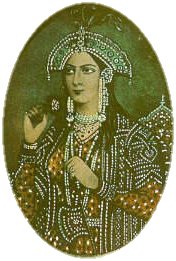
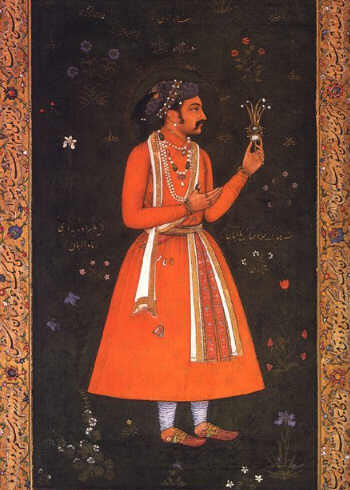
In 1631, Shah Jahan, emperor during Mughal's period of greatest prosperity, was griefstricken when his third wife, Mumtaz Mahal, died during the birth of their fourteenth child, Gauhara Begum. The court chronicles of Shah Jahan's grief illustrates the love story traditionally held as an inspiration for Taj Mahal. The construction of Taj Mahal begun soon after Mumtaz's death with the principal mausoleum completed in 1648. The surrounding buildings and garden were finished five years later. Visiting Agra in 1663, French traveller François Bernier wrote:
I shall finish this letter with a description of the two wonderful mausoleums which constitute the chief superiority of Agra over
Delhi. One was erected by Jehan-guyre [sic] in honour of his father Ekbar; and Chah-Jehan raised the other to the memory of his wife Tage Mehale, that extraordinary and celebrated beauty, of whom her husband was so enamoured it is said that he was constant to her during life, and at her death was so affected as nearly to follow her to the grave.


Agra, once the capital of the Mughal Empire during the 16th and early 18th centuries, is one and a half hours by express train from New Delhi. Tourists from all over the world visit Agra not to see the ruins of the red sandstone fortress built by the Mughal emperors but to make a pilgrimage to Taj Mahal, India’s most famous architectural wonder, in a land where magnificent temples and edificies abound to remind visitors about the rich civilization of a country that is slowly but surely lifting itself into an industrialized society.


The postcard picture of Taj Mahal does not adequately convey the legend, the poetry and the romance that shroud what Rabindranath Tagore calls "a teardrop on the cheek of time". Taj Mahal means "Crown Palace" and is in fact the most well preserved and architecturally beautiful tomb in the world. It is best described by the English poet, Sir Edwin Arnold, as "Not a piece of architecture, as other buildings are, but the proud passions of an emperor’s love wrought in living stones." It is a celebration of woman built in marble and that’s the way to appreciate it.
Taj Mahal stands on the bank of River Yamuna, which otherwise serves as a wide moat defending the Great Red Fort of Agra, the center of the Mughal emperors until they moved their capital to Delhi in 1637. It was built by the fifth Mughal emperor, Shah Jahan in 1631 in memory of his second wife, Mumtaz Mahal, a Muslim Persian princess. She died while accompanying her husband in Burhanpur in a campaign to crush a rebellion after giving birth to their 14th child. The death so crushed the emperor that all his hair and beard were said to have grown snow white in a few months.

When Mumtaz Mahal was still alive, she extracted four promises from the emperor: first, that he build the Taj; second, that he should marry again; third, that he be kind to their children; and fourth, that he visit the tomb on her death anniversary. He kept the first and second promises. Construction began in 1631 and was completed in 22 years. Twenty thousand people were deployed to work on it. The material was brought in from all over India and central Asia and it took a fleet of 1000 elephants to transport it to the site. It was designed by the Iranian architect Ustad Isa and it is best appreciated when the architecture and its adornments are linked to the passion that inspired it. It is a "symbol of eternal love".


The Taj rises on a high red sandstone base topped by a huge white marble terrace on which rests the famous dome flanked by four tapering minarets. Within the dome lies the jewel-inlaid cenotaph of the queen. So exquisite is the workmanship that the Taj has been described as "having been designed by giants and finished by jewellers". The only asymmetrical object in the Taj is the casket of the emperor which was built beside the queen’s as an afterthought. The emperor was deposed by his son and imprisoned in the Great Red Fort for eight years but was buried in the Taj. During his imprisonment, he had a view of the Taj.


As a tribute to a beautiful woman and as a monument for enduring love, the Taj reveals its subtleties when one visits it without being in a hurry. The rectangular base of Taj is in itself symbolic of the different sides from which to view a beautiful woman. The main gate is like a veil to a woman’s face which should be lifted delicately, gently and without haste on the wedding night. In indian tradition the veil is lifted gently to reveal the beauty of the bride. As one stands inside the main gate of Taj, his eyes are directed to an arch which frames the Taj.


The dome is made of white marble, but the tomb is set against the plain across the river and it is this background that works its magic of colours that, through their reflection, change the view of the Taj. The colours change at different hours of the day and during different seasons. Like a jewel, the Taj sparkles in moonlight when the semi-precious stones inlaid into the white marble on the main mausoleum catch the glow of the moon. The Taj is pinkish in the morning, milky white in the evening and golden when the moon shines. These changes, they say, depict the different moods of woman.


Different people have different views of the Taj but it would be enough to say that the Taj has a life of its own that leaps out of marble, provided you understand that it is a monument of love. As an architectural masterpiece, nothing could be added or substracted from it.


Many architects have rated it as the most perfect of all buildings standing on earth. Three artists designed it: a Persian, an Italian, and a Frenchman. But the design is completely Mohammedan. Even the skilled artisans who built it were brought in from Baghdad, Constantinople, and other centers of the Muslim faith. For 22 years more than 20,000 workmen were forced to build the Taj. The Maharaja of Jaipur sent the marble as a gift to Shah Jahan. The building and its surroundings cost more than $200,000,000 in todays currency.
Passing through a high wall, one comes suddently upon the Taj - raised upon a marble platform, and framed on either side by handsome mosques and stately minarets. In the foreground spacious gardens enclose a pool in whose waters the inverted palace becomes a quivering dream. Every portion of the structure is of white marble, precious metals, or costly stones. The building is a complex figure of twelve sides, four of which are portals. A slender minaret rises at each corner, and the roof is a massive spired dome. The main entrance, once guarded with solid silver gates, is a maze of marble embroidery; inlaid in the wall in jeweled script are qotations from the Koran, one of which invites the "pure in heart" to enter "the gardens of Paradise."
Shah Jahan had begun his reign by killing his brothers; but he had neglected to kill his sons, one of whom was destined to overthrow him. In 1657 his son Aurangzeb led an insurrection from the Deccan. Aurangzeb defeated all the forces sent against him, captured his father, and imprisoned him in the Fort of Agra. For 9 bitter years the deposed emperor lingered there, never visited by his son, attended only by his faithful daughter Jahanara, and spending his days looking from the Jasmine Tower of his prison across the Jumna to where his once-beloved Mumtaz lay in her jeweled tomb.


The new emperor Aurangzeb was a more pious Muslim than his father Shah Jahan had been. He memorized the entire Koran, spent days in fasts, and campaigned against infidelity. He cared little for luxuries, but, paradoxically, gave the world one of its most perfect works of art: a marble screen inside the Taj Mahal. Native and European thieves robbed the tomb of its abundant jewels, and of the gold railing, encrusted with precious stones, that once enclosed the sarcophagi of Shah Jahan and his Queen. Aurangzeb replaced the railing with an octagonal screen of almost transparent marble, carved into a miracle of alabaster lace. Few products of human art have ever surpassed the beauty of this screen.


From afar the Taj Mahal, with its delicate details, is not imposing. Only a nearer view reveals that its perfection has no proportion to its size. When in our hurried times, we see enormous structures of a hundred stories raised in a year, and then consider how 20,000 men worked for 22 years on this little tomb, hardly a hundred feet high, we begin to sense the difference between industry and art. And perhaps more importantly, we sense the ultimate lesson it offers: beauty and that which lasts, is based on love.


Christ the Redeemer


Description :

Statue of Christ the Redeemer is located at the top of Corcovado Mountain at a height of 710 meters, Statue of Christ the Redeemer Brazil is certainly one of the world's best known and most visited monuments. The statue of Christ the Redeemer represents Jesus standing with outstretched, welcoming arms and is one of the most famous symbols of this lively city.The entire monument of statue of Christ the Redeemer is 38m high with the statue accounting for 30m, the span from finger tip to fingertip is 28m and there is a small chapel housed in the base. As a vantage point it offers superb views of downtown Rio de Janeiro, the bay, Sugarloaf Mountain and Copacabana and Ipanema Beaches.
The monument of statue of Christ the Redeemer was inaugurated on the day of Our Lady of Aparecida, 12 Oct 1931 by then President of Brazil, Getúlio Vargas and cardinal Dom Sebastião Leme . The original design of statue of Christ the Redeemer Brazil was done by a Brazilian, named Heitor da Silva Costa. He was also the engineer in charge of the construction. He shared the project with French sculptor Paul Landowski. It was built from 1926 to 1931, with funds raised from donations. There's a chapel for 150 people on the base of the statue.
The original design for this statue was made by a man named Oswald. He had designed it to have a globe in one, and standing over a pedestal symbolizing the world. This design was not agreed on.Then, the idea of having the statue with wide open arms was made by Heitor da Silva

  • The reason why it was built was to show that he, Christ loves all.
  • It stands on top of the Corcovado Mountain.
  • The reason for why it was built with wide open arms is to embrace all that come to him.
    Costa.

History:

The idea for erecting a large statue atop Corcovado had been around since mid

1850s, when Catholic priest Pedro Maria Boss requested financing from Princess Isabel to build a large religious monument.[citation needed] Princess Isabel did not think much of the idea, which was completely dismissed in 1889, when Brazil became a Republic, with laws mandating the separation of church and state. Statue of Christ the Redeemer with open arms was chosen.

Local engineer Heitor da Silva Costa designed the statue; it was sculpted by Paul Landowski, French monument sculptor of Polish origin. A group of engineers and technicians studied Landowski's submissions and the decision was made to build the structure out of reinforced concrete (designed by Albert Caquot) instead of steel, more suitable for the cross-shaped statue.[citation needed] The outer layers are soapstone, chosen for its enduring qualities and ease of use. Stone for the monument was taken from Limhamn, in Malmö, Sweden.[citation needed] Construction lasted five years — from 1926 to 1931 and the monument was opened on October 12, 1931. The cost of the monument was $250,000.

In October 2006, on the statue's 75th anniversary, Archbishop of Rio Cardinal Eusebio Oscar Scheid consecrated a chapel (named for the patron saint of Brazil - Nossa Senhora Aparecida) under the statue. This allows Catholics to hold baptisms and weddings there.
As of 7 July 2007, Christ the Redeemer was named one of the New Seven Wonders of the World in a list compiled by the Swiss-based The New Open World Corporation.[7] In Brazil there was a campaign Vote no Cristo (Vote for the Christ) which had the support of private companies, namely telecommunications operators that stopped charging voters to make telephone calls to vote.

Additionally, leading corporate sponsors including Banco Bradesco and Rede Globo spent "millions" of dollars in the effort to have the statue voted into the top seven. Around the same time, the computer game Civilization IV: Beyond the Sword included the statue as a world wonder.

Tuesday, October 30, 2007

Seven Wonders of the World.

The statue of Jesus stands some 38 meters tall, atop the Corcovado mountain overlooking Rio de Janeiro. Designed by Brazilian Heitor da Silva Costa and created by French sculptor Paul Landowski, it is one of the world’s best-known monuments. The statue took five years to construct and was inaugurated on October 12, 1931. It has become a symbol of the city and of the warmth of the Brazilian people, who receive visitors with open arms.


The immense mausoleum was built on the orders of Shah Jahan, the fifth Muslim Mogul emperor, to honor the memory of his beloved late wife. Built out of white marble and standing in formally laid-out walled gardens, the Taj Mahal is regarded as the most perfect jewel of Muslim art in India. The emperor was consequently jailed and, it is said, could then only see the Taj Mahal out of his small cell window.


In the 15th century, the Incan Emperor Pachacútec built a city in the clouds on the mountain known as Machu Picchu ("old mountain"). This extraordinary settlement lies halfway up the Andes Plateau, deep in the Amazon jungle and above the Urubamba River. It was probably abandoned by the Incas because of a smallpox outbreak and, after the Spanish defeated the Incan Empire, the city remained 'lost' for over three centuries. It was rediscovered by Hiram Bingham in 1911.

Chichén Itzá, the most famous Mayan temple city, served as the political and economic center of the Mayan civilization. Its various structures - the pyramid of Kukulkan, the Temple of Chac Mool, the Hall of the Thousand Pillars, and the Playing Field of the Prisoners – can still be seen today and are demonstrative of an extraordinary commitment to architectural space and composition. The pyramid itself was the last, and arguably the greatest, of all Mayan temples.


The great amphitheater in the centre of Rome was built to give favors to successful legionnaires and to celebrate the glory of the Roman Empire. Its design concept still stands to this very day, and virtually every modern sports stadium some 2,000 years later still bears the irresistible imprint of the Colosseum's original design. Today, through films and history books, we are even more aware of the cruel fights and games that took place in this arena, all for the joy of the spectators.


On the edge of the Arabian Desert, Petra was the glittering capital of the Nabataean empire of King Aretas IV (9 B.C. to 40 A.D.). Masters of water technology, the Nabataeans provided their city with great tunnel constructions and water chambers. A theater, modelled on Greek-Roman prototypes, had space for an audience of 4,000. Today, the Palace Tombs of Petra, with the 42-meter-high Hellenistic temple facade on the El-Deir Monastery, are impressive examples of Middle Eastern culture.


The Great Wall of China was built to link existing fortifications into a united defense system and better keep invading Mongol tribes out of China. It is the largest man-made monument ever to have been built and it is disputed that it is the only one visible from space. Many thousands of people must have given their lives to build this colossal construction.


Powered By Blogger